Notes on Mega.dev workshop on JEV:
The user input does not go into LLM, but into JEV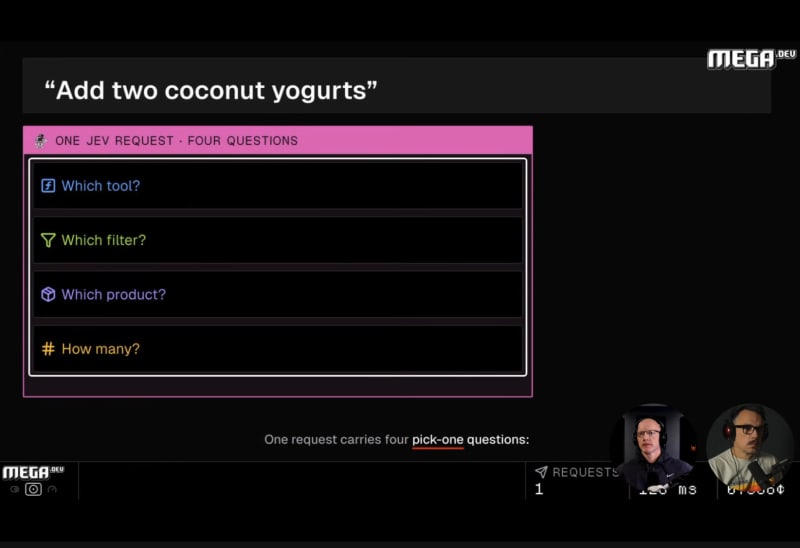
if you give JEV to infer on, you can throw all conditions at the same time. You can discard that don't matter and apply logic that matters.

As you preload, as things float the top, you can pick what is most relevant.
Support emails to 1 of 4 teams?
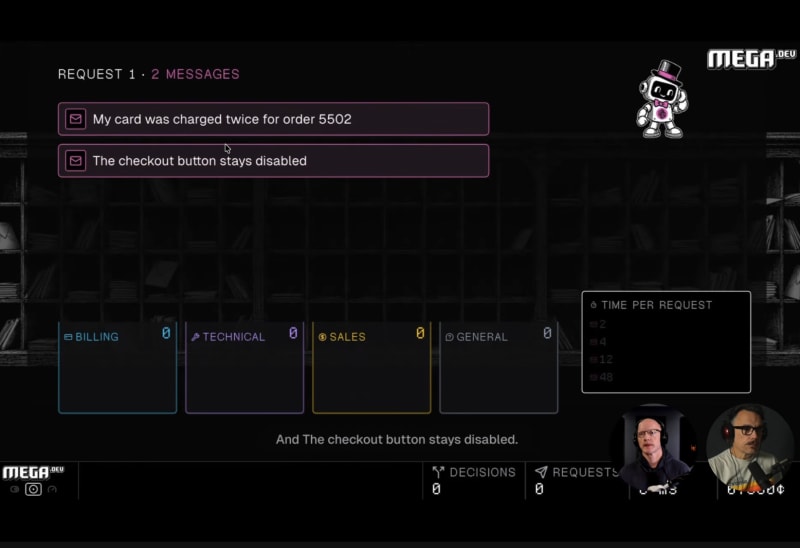
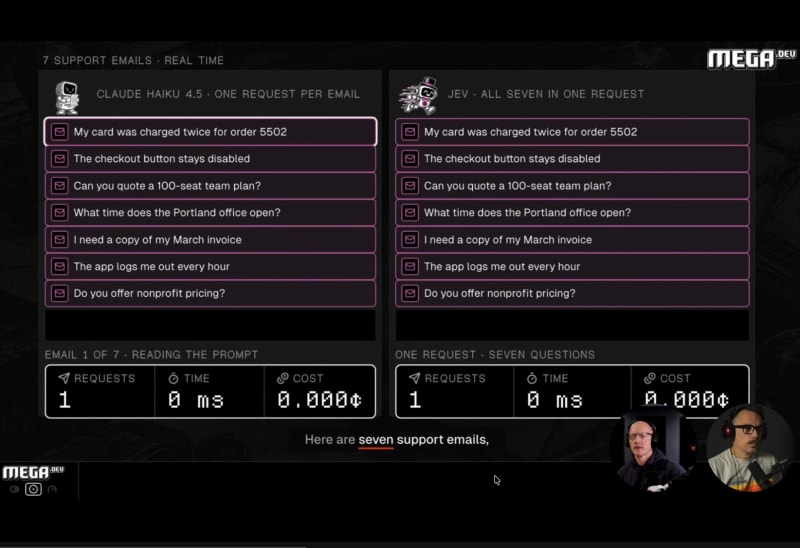
Haiku v JEV
JEV finishes way before Haiku
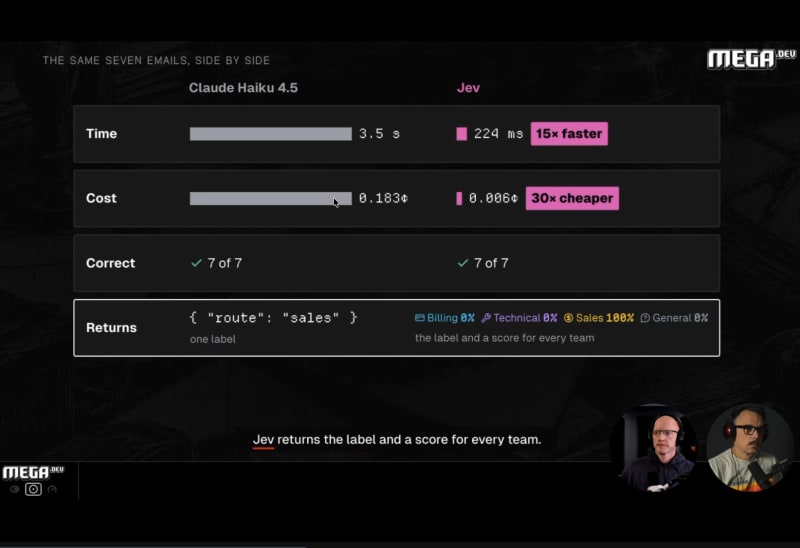
A system one model, after the fast thinking in pyschology
Typesafe AI -> Confidence routing
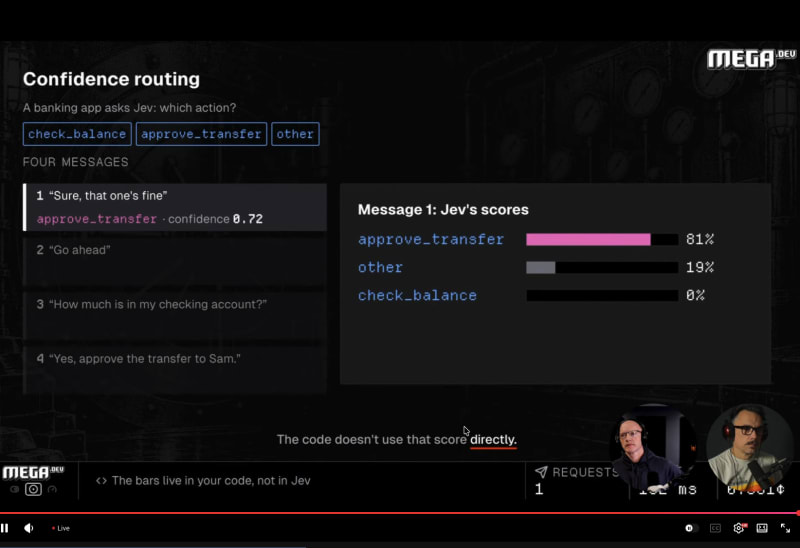
Confidence score sets one floor per action
How can we apply JEV and it's confidence scoring to privacy engineering?
AI can be so cheap (JEV) it can be difficult to measure. JEV will go barely gong
Categorize email, bulk data, toss any questions against it. If below a threshold, you can automate. Above a threshold, defer to a person as a fallback. A default if a function does not match, is to defer to a person.
Logs can capture what falls through and you can evolve the code.
The speed is almost instantaneous. What to build realtime AI? Its faster than human perceptions. Debouncing is important.
Browser use Demo: Chrome extension
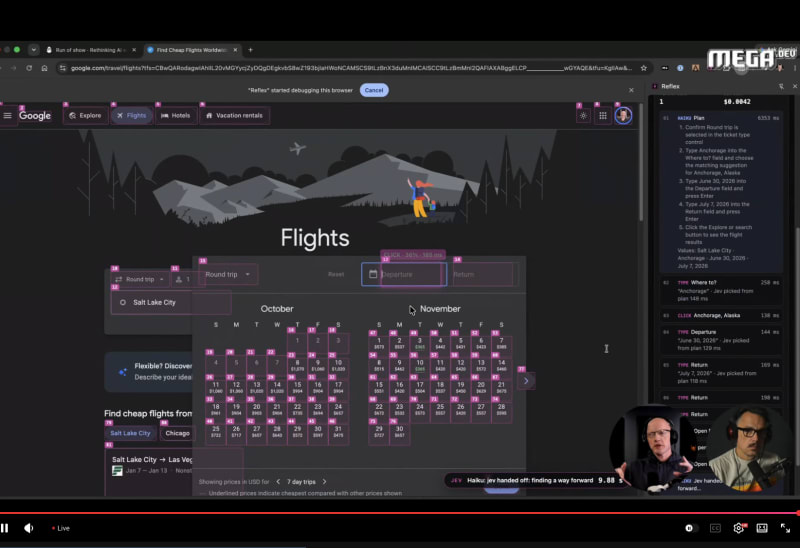
John L. speech to text searching for flights.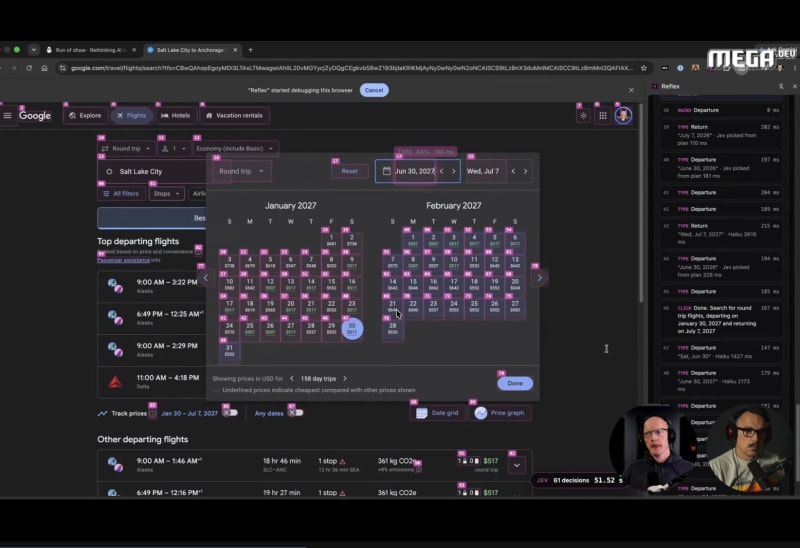
For typing, has to hand off to Haiku. You can take this approach and hand off to anything visual
- Catchpoint tests, turbo charged.
- e2e tests turbo charged
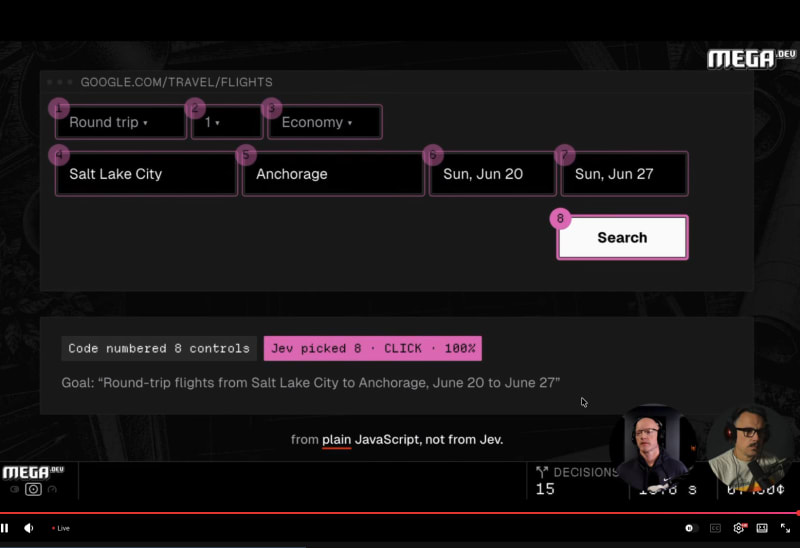
Smart time to pick from the UI elements
doing multiple things at the time
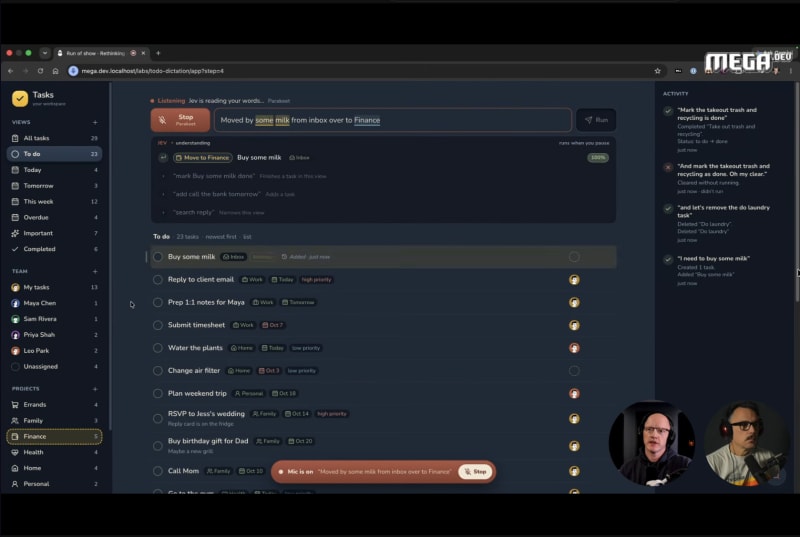
You get this experience, and saying things to wanting to happen. UI needed to show what is happening. When building ux, providing animations to convey what is occurring -- because it's too darn fast!
Things are developing into a game loop. Its becoming much more interactive experience and less of clicking around.
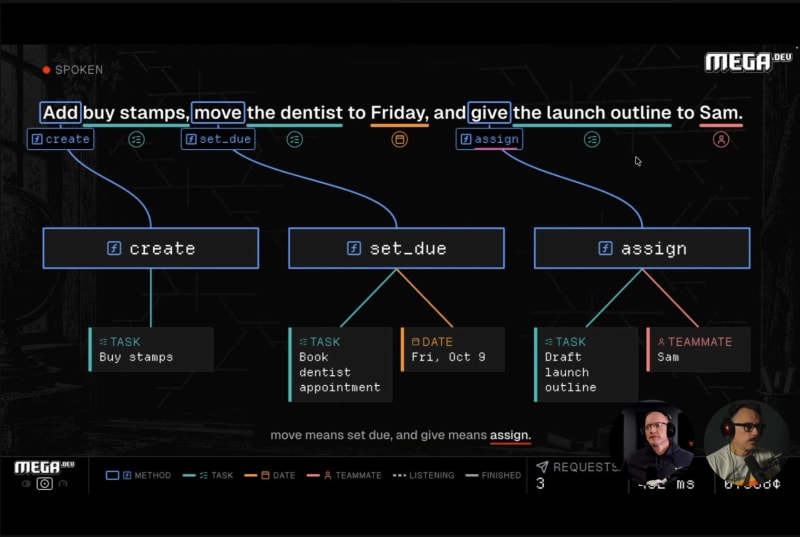
breaking down a sentence.
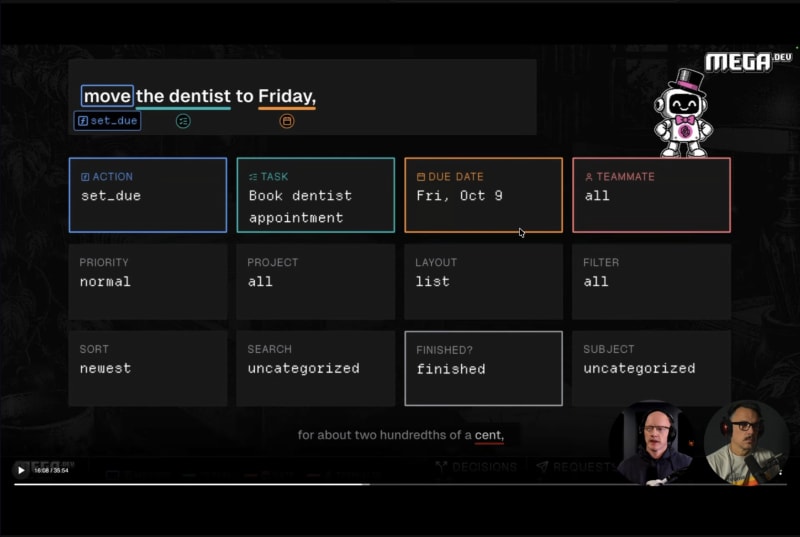
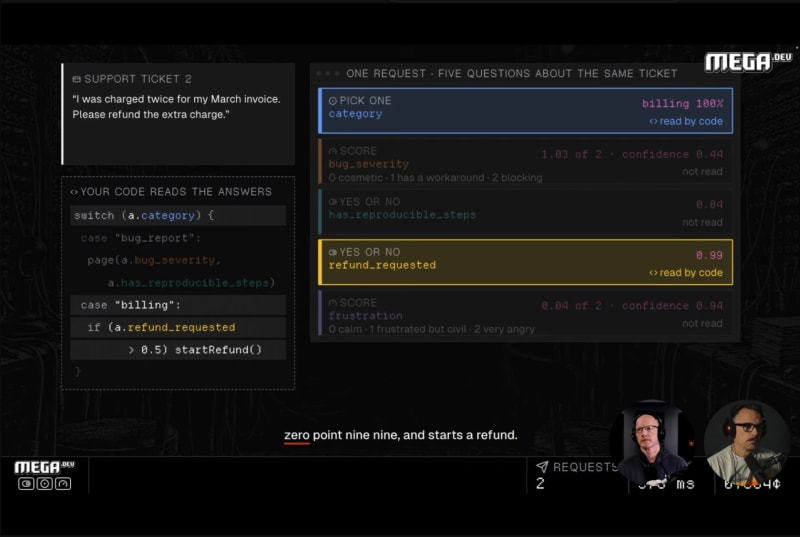
It's important to see, all questions are answered at the same time. When you have a little data, what do you need to ask it in order to get where it needs to go in relation to buckets (to match in db)
Think of your job, the content of the menu and how it's strucuture, and customers are placing orders in human speech. Your job is to set up the menu and instructions. Think yourself what questions are asking. Skills that Typesafe shares is a cookbook, you can JEV a question.
Ask questions that could applied, known as Speculative Fan out (TypeSafe)
Search hours of video in one video
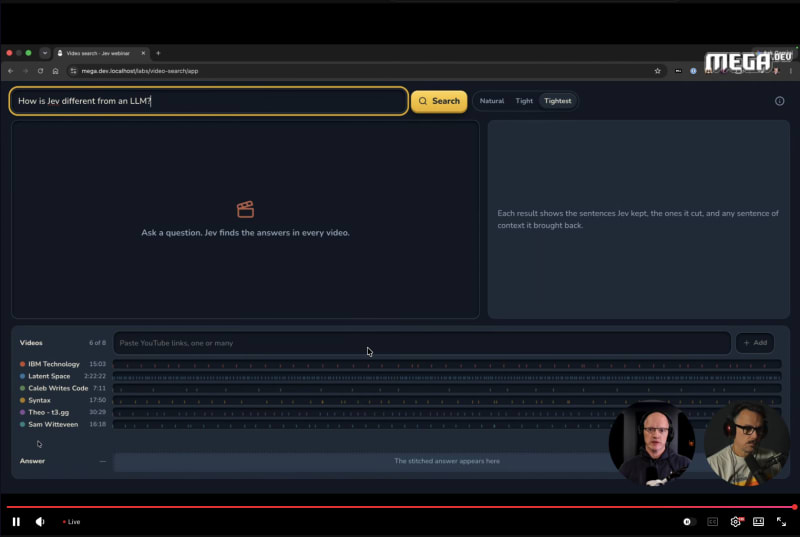
six youtube videos. its going to do video processing. Fire a question, based on each video's transcript
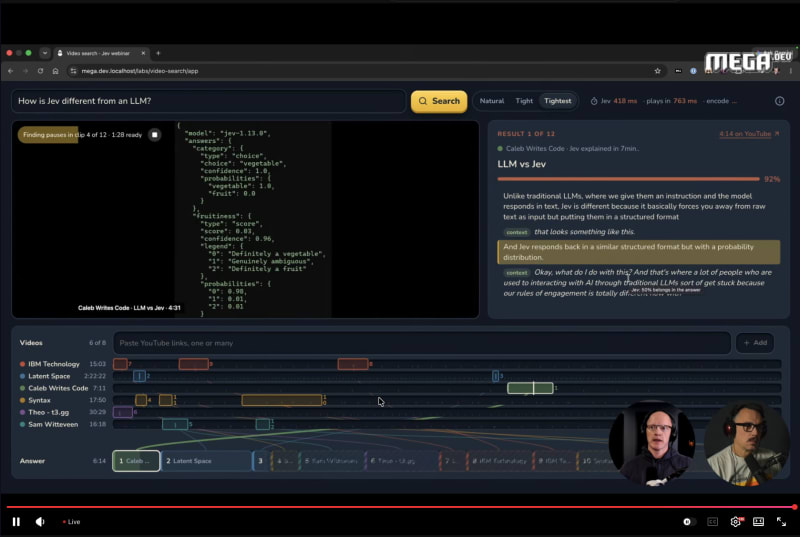
Find the exact portion each video
Taking each chunk and reassemble into a one video
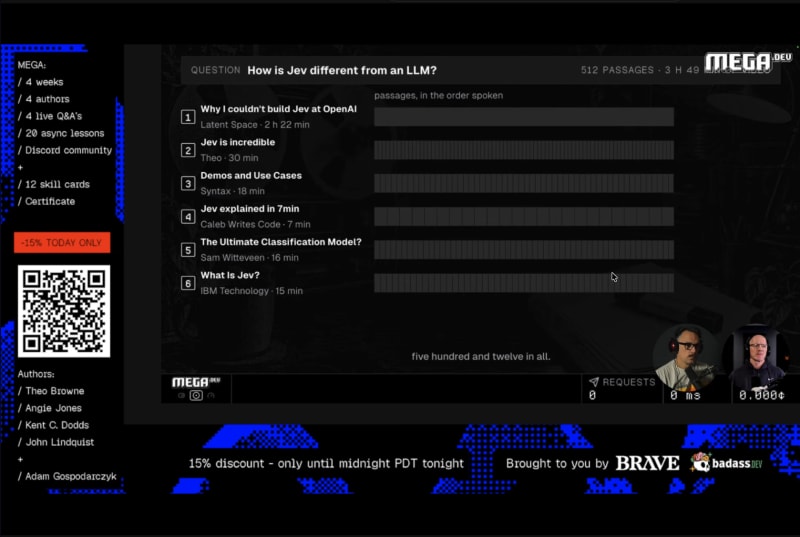
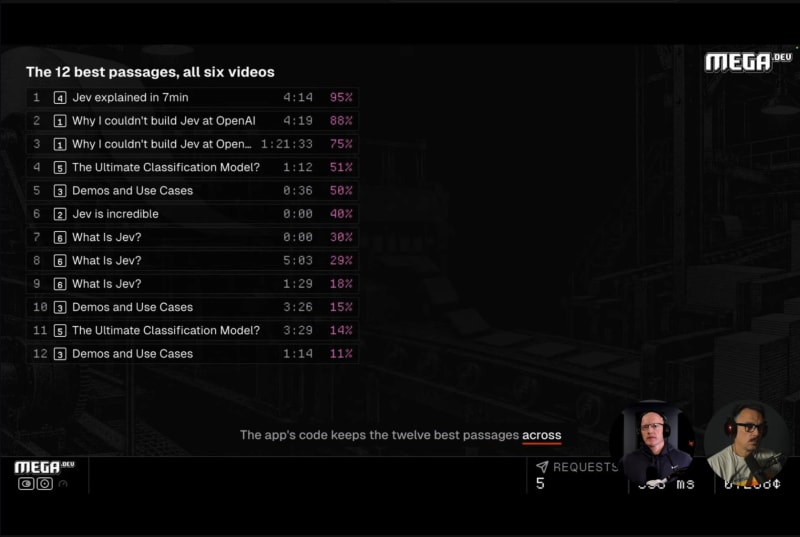
another round in answering if the filer stays or drops?
3 rounds, eight requests in blazing speed.
Composite scoring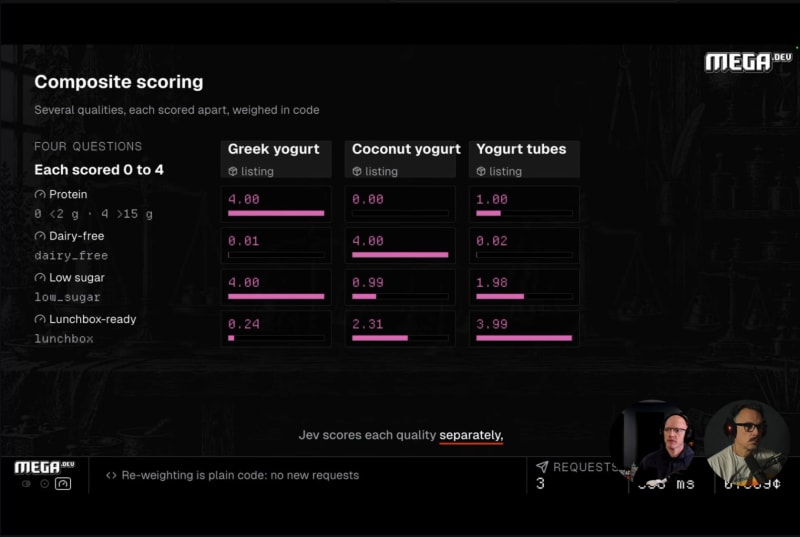
The ranking lives in your code. the weights
Different from keyword finding because it's inferring from words. A smarter search
Wikipedia ends up in philosophy
JEV uses wikipedia api to find philosophy
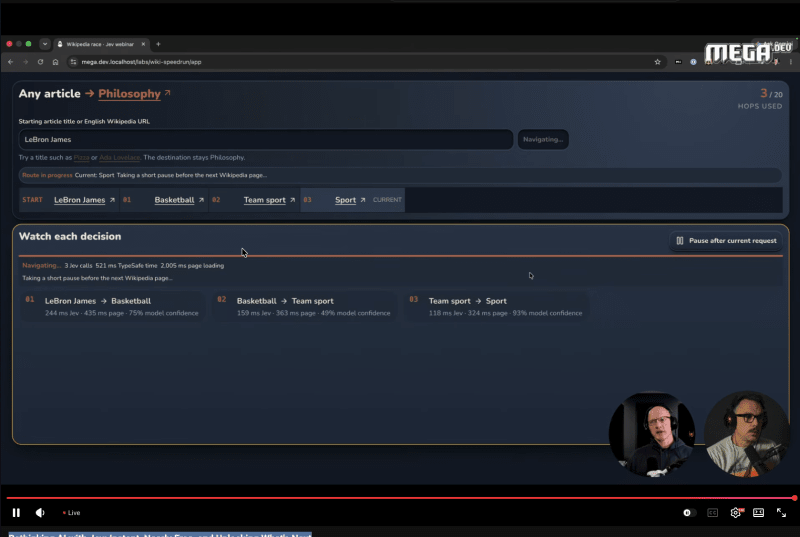
Agentic engine optimization, to find the broken paths or fastest paths to get from A to B. thinking about the users.
Which one gets you closer to philosophy?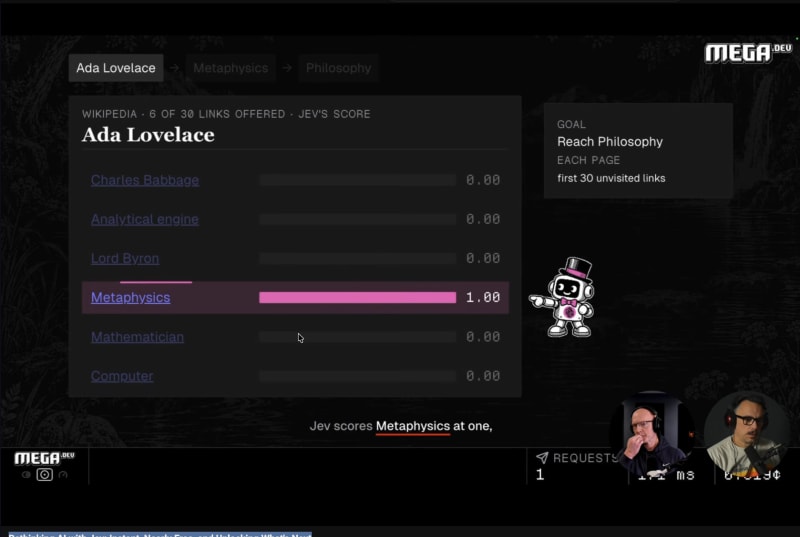
this is throwing JEV, whatever is user or agent facing, crawling and walking arrive it's destination using every navigate it on the page. You can surface your project, or UI like dropdowns, you can ask JEV to test for you. User test is still necessary. You can tell Opus make up 50 case scenarios, JEV can surface where the tensions and friction is.
send three robots at a job
Functions and with state
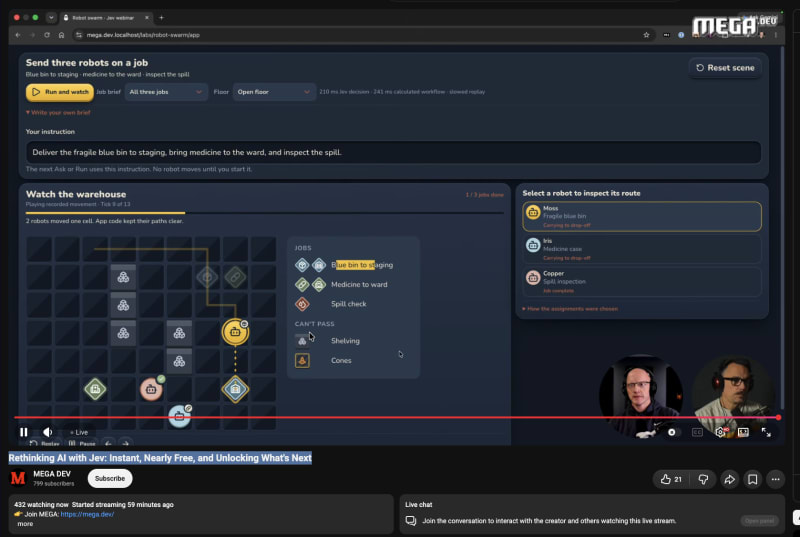
There is a lot tasks that depends on state (like time), that might block a function the agent uses and blocks them. This allows for a router to get to task.
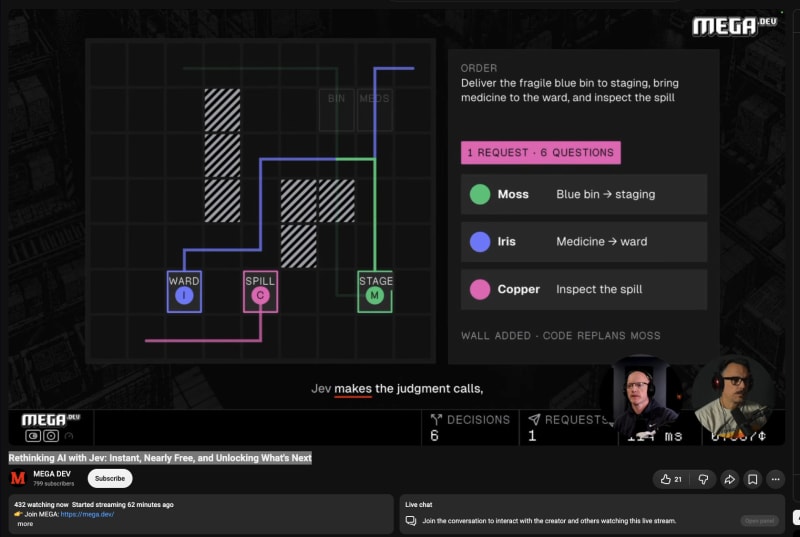
JEV makes the judgement calls and the code does the rest.
Share a plan, in queue order
Planning the building data model needs reasoner
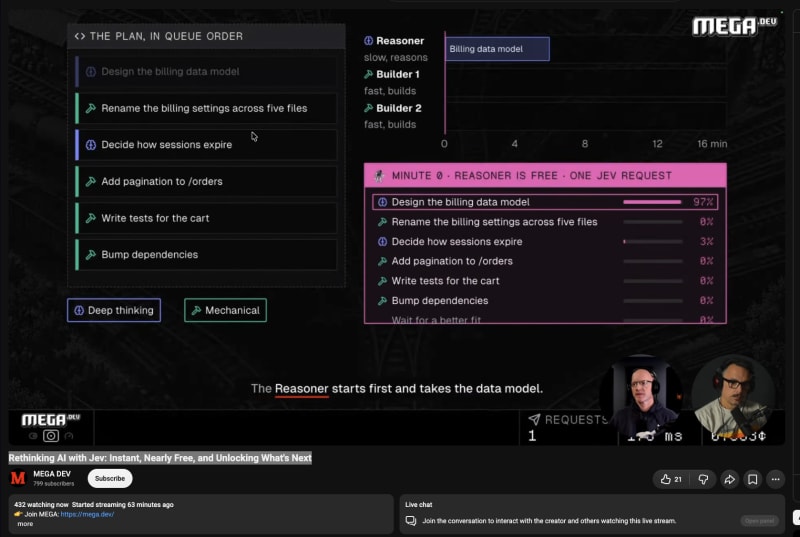
Mechanical changes, the builder 1 and 2 can take on those.
Kind of like a dynamic state machine.
What about a lot tasks to choose from, or has similar tasks?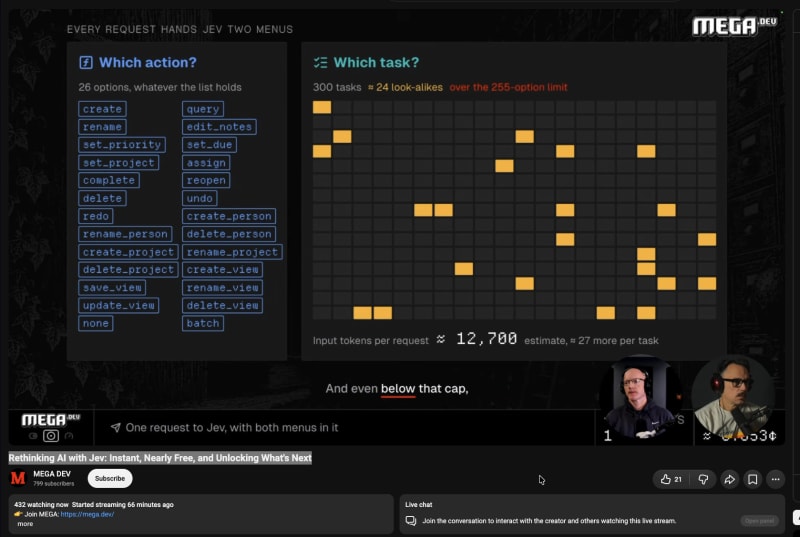
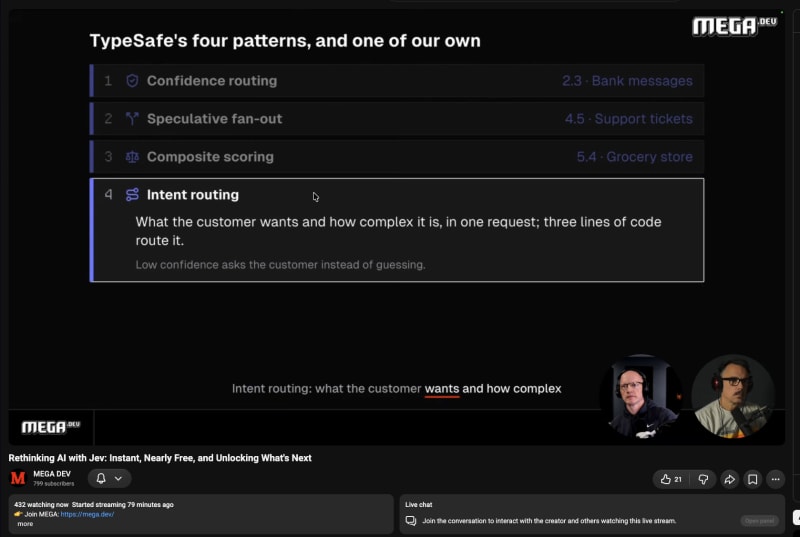
intent routing
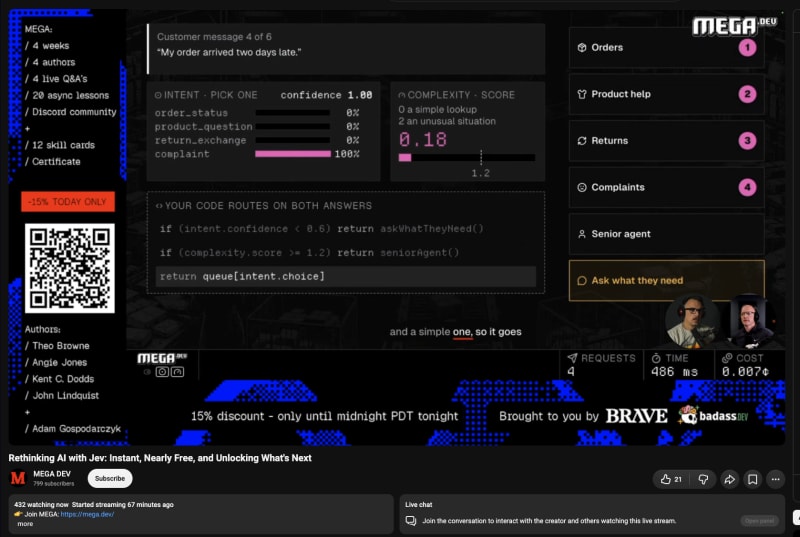
JEV, a date parser and router for plain code
narrows the task list to a few candidates
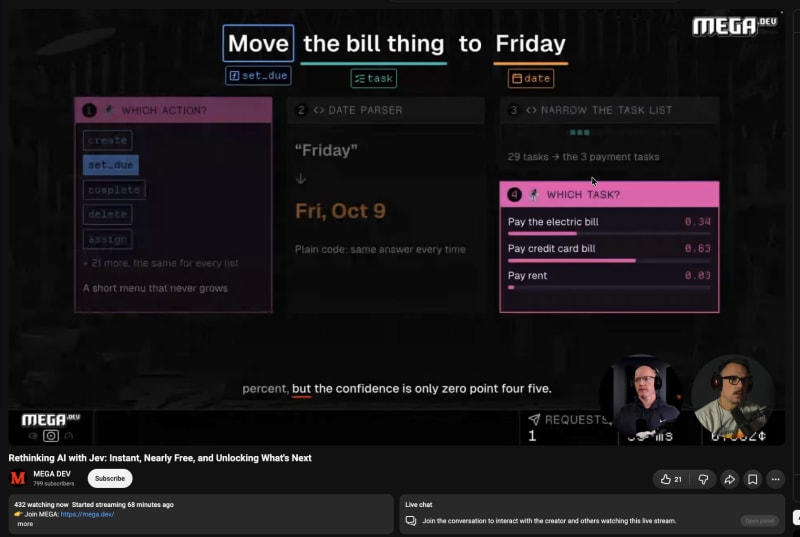
The list stays short, narrow it in code first and it needs to be deterministic keep it code
JEV makes the quick decisions. JEV does not replace for everything. Avoid forcing it in things that have been solved in traditional programming.
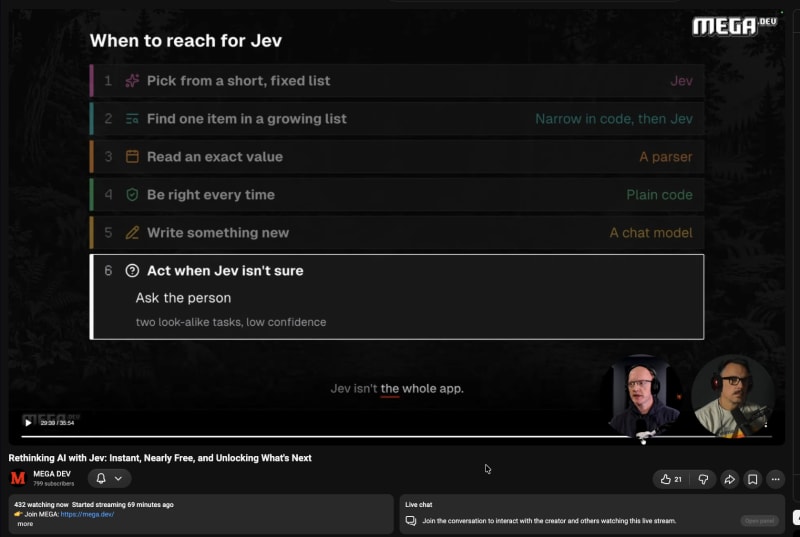
Todo app, matching app and narrowing down for JEV to pick from. JEV will get more expensive. It's meant for quick questions with messy data and messy users.
before you ship
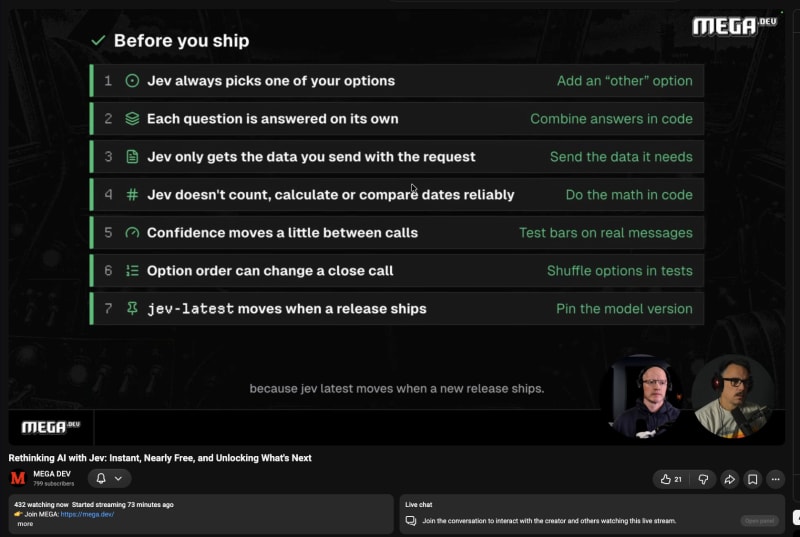
Every message walks through JEV
log how JEV walks. Code the path and avoid using JEV
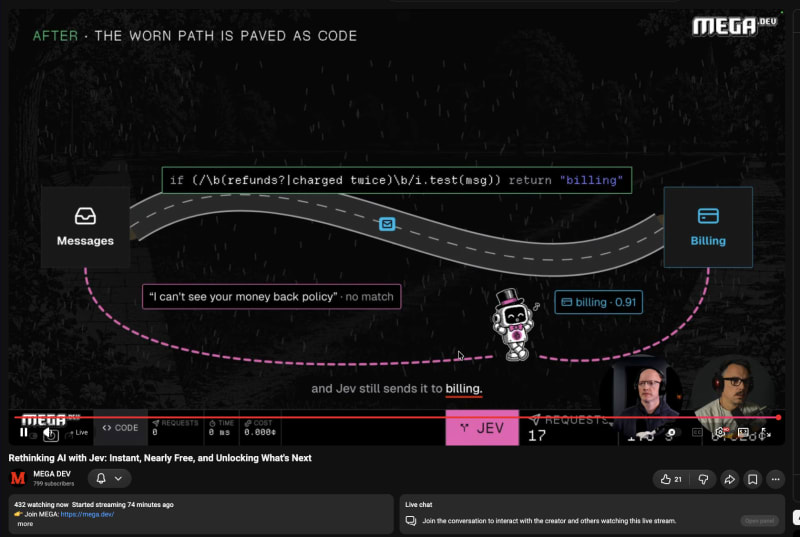
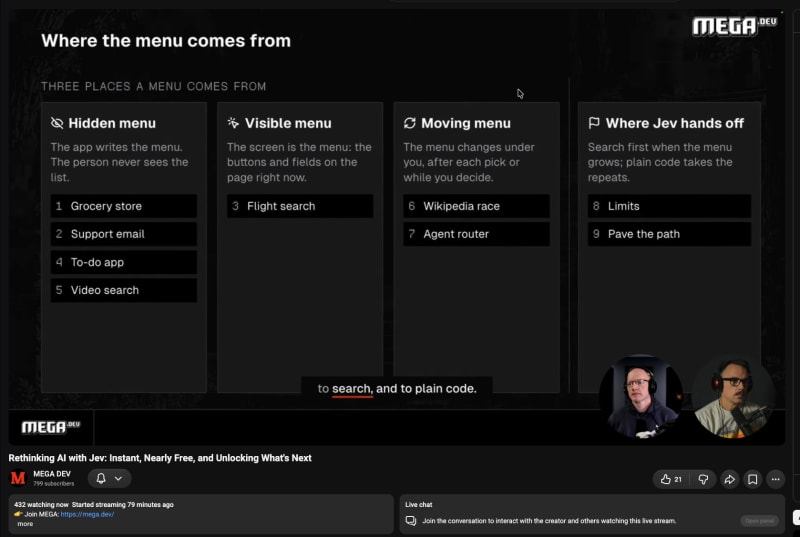
Four patterns TypeSafe cites in their docs
Pave what repeats: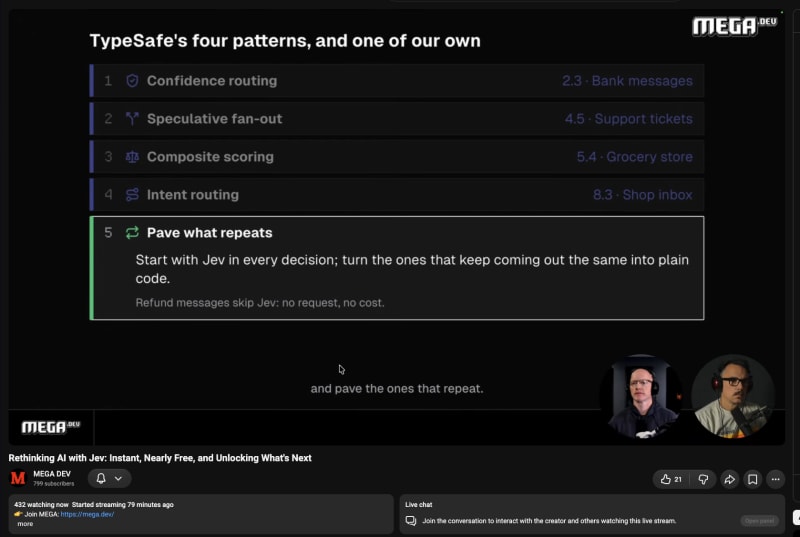
Cheap: JEV and Perplexity option
A little smarter, but 10x the cost. JEV has the best balance. As any product, they are going to try to win over users.
John L. spent $6. millions of requests. A dollar will translate a month of usage
OpenRouter? look into it. Between it's decisions can vary in scores by decimals. You won't be able switch JEV to another thing because it may work differently. There is statical anonomlies.
Your product is your factory; your factory is your product. You can point a video and analyze and Opus will reverse engineer it in 15 minutes.
mega.dev next things
Personal software is easy. Production good software is much more difficult.
- Dog fooding and caring about your users
- If you don't use the tool, it will show.
Managing software with agents. Feedback systems conversing with your team and getting back with agents is critical.
you can do research with similar products and surface the pain points.
You can customize the tools on the terminal level and build tools for teams.